 |
|
|||||||||||||||||||||||||||||||||||||||||||||||||||||||||||||
|
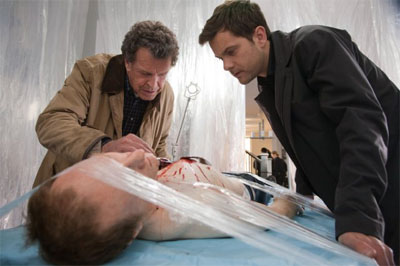
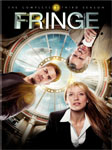
Peter: "None of this makes any sense."This sums up Fringe  . All 22 episodes plus extra goodies for season three are available on DVD and Blu-ray. . All 22 episodes plus extra goodies for season three are available on DVD and Blu-ray.
In beginning season three of Fringe , it's gratifying to find no gap in the timeline. We start off where we left - with most of our people back here, while only agent Olivia Dunham (Anna Torv) is stuck there. Granted here or there, it is flip-flopped, inside-out and upside-down, then tilted sideways just for fun. Once in a while, the camera angle goes wonky, or shakes and shimmers, contributing to the confusion. Watching Fringe, sinking into Fringe, is like being drunk underwater in the sky. All of Olivia's memories twist back onto themselves as she tries to sort out who she is - belatedly realizing that she is our Olivia, stuck in the alternate universe. The hijacked cabbie (Andre Royo) from the first episode jump-starts the show with an understated brilliance; his acting sets the bar high for the season. His role: to help Olivia escape, at gunpoint. 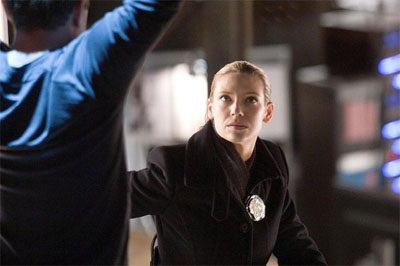 As season three progresses, it continues to grow more convoluted. It becomes less about the monsters-of-the-week and more about the unraveling universes. Never fear, though - there are monsters and cases aplenty, but they are tucked into the bigger prevailing story. There is much to delight: murderous noise, Mouse Trap-like chain reactions, a tech'd-out senator, number stations causing amnesia, child abductions, Frankenstein'd ballerinas, dream-state time travel, melting bones, a 'haunted' building, floating vandals, a cartoon brain-ride, pregnancy in fast forward. and dueling Olivias. As season three progresses, it continues to grow more convoluted. It becomes less about the monsters-of-the-week and more about the unraveling universes. Never fear, though - there are monsters and cases aplenty, but they are tucked into the bigger prevailing story. There is much to delight: murderous noise, Mouse Trap-like chain reactions, a tech'd-out senator, number stations causing amnesia, child abductions, Frankenstein'd ballerinas, dream-state time travel, melting bones, a 'haunted' building, floating vandals, a cartoon brain-ride, pregnancy in fast forward. and dueling Olivias. Can't forget the double Livs (the red-headed "FauxLivia" and our blond Olivia) and the two Walters, and the variety of changes from their world to ours (they had the Great Sheep Blight over there, common veggies are hard to procure, the Twin Towers stand, an aged John F. Kennedy is there, common pop songs play slower, blimps rather than planes, Dogs: The Musical , Penn Station is Springsteen Station, they use the metric system, and their Charlie (Kirk Acevedo) lives on. ) On each side, the characters continue to grow and deepen. The good versus evil line blurs as they all become more real. 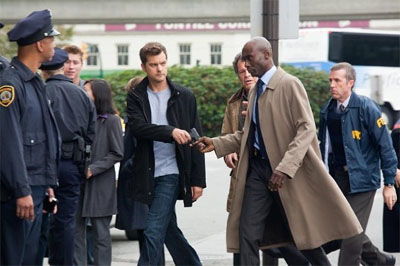 Beyond these little differences, small happinesses (fun breadcrumbs to pick up on while watching) prove that this show is somewhat fan-driven - the floating locator words, the Observer (Michael Cerveris, in every single episode like a sci-fi Where's Waldo), the '80s intro, the red-and-blue intros, and the futuristic intro. The magic typewriter is a trip, and the cow is sweetly entertaining - Walter tries to get her to give chocolate milk. Little asides like these complete the world and help fans stay. Beyond these little differences, small happinesses (fun breadcrumbs to pick up on while watching) prove that this show is somewhat fan-driven - the floating locator words, the Observer (Michael Cerveris, in every single episode like a sci-fi Where's Waldo), the '80s intro, the red-and-blue intros, and the futuristic intro. The magic typewriter is a trip, and the cow is sweetly entertaining - Walter tries to get her to give chocolate milk. Little asides like these complete the world and help fans stay. On the other hand, there are the - dare it be said - possible plot holes. (Here's hoping that some of them will be filled in next season!) In the fourth episode, Do Shapeshifters Dream of Electric Sheep?, a shifter in his prison cell dies right after FauxLivia visits him, and it is never addressed. Although Peter (Joshua Jackson) is supposedly a world-renowned con artist, he is completely taken by that Liv - causing all manner of trust issues when our Liv returns. In episode five, when the idea of Amber Quarantine is introduced, a living man is cut out of the solid amber. For all that the amber is quite cool, it began as gas - wouldn't the gas be breathed into the lungs and solidify? There is no mention of the all-important pattern. In a later episode, a receipt for "20 pounds of C4" is found in the suspect's home. Really? A receipt for plastics? Where did this fellow go buy black market explosives that would offer a tidy receipt? Not to mention the relatively tiny explosion that results from said C4. 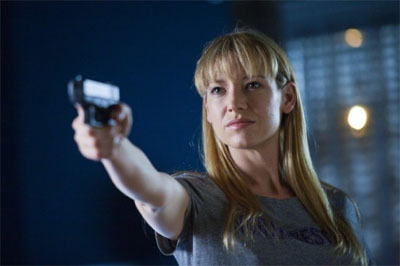 Peter goes on a murder spree, spends a few episodes hiding his whereabouts, activities, lying to Walter and Liv, but then it's never spoken of again. That's a big one to drop, so it undermines the story credibility. Later in the season, Anna Torv performs not only both Olivia but also the role of the (late) William Bell, who was played by Leonard Nimoy. Her depiction is terribly giggleworthy. Down to the uniquely gravelly voice, the random eyebrow pops, Torv does it. Watching a woman channel Leonard Nimoy is priceless. However, her being taken over by "Belly" distracts Liv from grilling Peter about his pet project. Once she is back in control, they have moved onto bigger issues. Peter goes on a murder spree, spends a few episodes hiding his whereabouts, activities, lying to Walter and Liv, but then it's never spoken of again. That's a big one to drop, so it undermines the story credibility. Later in the season, Anna Torv performs not only both Olivia but also the role of the (late) William Bell, who was played by Leonard Nimoy. Her depiction is terribly giggleworthy. Down to the uniquely gravelly voice, the random eyebrow pops, Torv does it. Watching a woman channel Leonard Nimoy is priceless. However, her being taken over by "Belly" distracts Liv from grilling Peter about his pet project. Once she is back in control, they have moved onto bigger issues.But back to the Livs: FauxLivia is easier with a smile but doesn't have the dogged determination that our Olivia has. FauxLiv let things slide that our Liv would have fought tooth and nail for. When our Liv returns, she is whiny, bitter and manipulative - unusual and unlikable, even with a storyline that supports her feelings. Olivia is anything but average, and it seems a disservice to the strong, clever woman we've come to know. Olivia has struggled with obstacles - emotional and physical - in the past, and always came across as extremely resilient. The Liv who returns to Peter, with the which-Olivia-will-he-choose storyline, gets old very fast. Her fussiness makes her seem melodramatic and harder to root for. Can't we just get back to saving the universes again? 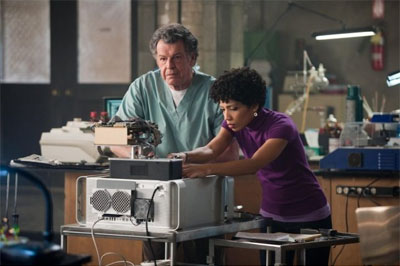 Little by little, regardless of which universe you root for, Astrid (Jasika Nicole) slowly emerges as the unsung hero - the Samwise Gamgee of the Fringe universes. Standing behind and holding everyone up, she is insanely intelligent but - like any good bookworm - she has no people instincts. Details like this - the quintessential understanding of human nature - highlight the value and near-perfection in characters of Fringe. Pulling strings behind the scenes is the slippery Nina Sharp, the one-time trusted friend and associate of "Belly," interpreted by actress Blair Brown. Little by little, regardless of which universe you root for, Astrid (Jasika Nicole) slowly emerges as the unsung hero - the Samwise Gamgee of the Fringe universes. Standing behind and holding everyone up, she is insanely intelligent but - like any good bookworm - she has no people instincts. Details like this - the quintessential understanding of human nature - highlight the value and near-perfection in characters of Fringe. Pulling strings behind the scenes is the slippery Nina Sharp, the one-time trusted friend and associate of "Belly," interpreted by actress Blair Brown.The shining star of Fringe is Australian John Noble, who plays American scientist Walter Bishop-slash-Secretary of Defense Walternate, the Walter of the other universe. He truly stands apart. Given that a good portion of this story seems somewhat recycled (shades of The Lost Room , Alias , Alias , Lost , Lost ), the acting saves it from the doldrums with their eagerly honest portrayal. ), the acting saves it from the doldrums with their eagerly honest portrayal. What sets Mr. Noble apart from the crowd, however, is that in playing the two Walters, he physically becomes different; his stance, his voice, his eyes go from warm to icy cold and dead, even the set of his face. It's all very different. Our Walter has a vulnerability, a gooey sweet center filled with guilt-laced love with tremors and tics; Walternate is harder, driven by an almost militant revenge. 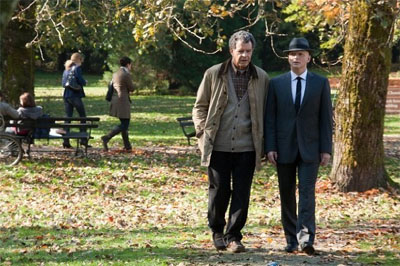 The seed of the twisted tale is in Walter, a grand agonizing Greek-esque tragedy. The Walters lost a son, to sickness, and both fought to find a cure in time. One son died. One son was kidnapped. One Walter is broken, the weight of his crime weighing too heavily. One is bent on retribution, and all of his life's deeds built to that single goal. The two universes move closer to collision, all for the vengeance and love of one son. Even when he is our Walter, he has periods of strange lucidity when the old hard Walter who kidnapped another man's Peter swims in those murky confused old eyes.
 Somehow, John Noble imbues all of this into his portrayal of each different man. He truly makes the show. (Though Agent Phillip Broyles on an accidental LSD high, as acted by Lance Reddick, is a sight to behold - Broyles grinning like a loon is such a change of pace and so very out of character; at moments like that, we remember exactly why the show is so entertaining. Never get too comfortable.) The whole convoluted mess boils down to one ultimate concept: love, and its parallel, hatred. Walter broke the worlds, setting them on the current path of utter terror and destruction. It all revolves around the understandably human needs, for all that these basics hide in Fringe 's science and conspiracy theories. The deepening mystery brings out the humanity of our characters. The human heart, soul and psyche is not built to handle loving two of the same person, jumping universes, or bending laws of physics. These are all explored consistently through season three of Fringe. 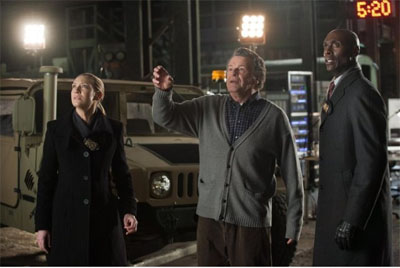 There are also hardworking, loyal, creative people striving to save the world at great risk to their own personal lives and loves. It is an emotionally chaotic paradox sometimes. Woven into the last couple of episodes is a treasure hunt of sorts, not unlike the Rambaldi quests from Alias - old manuscripts, ancient devices, and sketches of our key players. And, of course, it is all to save the worlds from destruction.
The constant product placement is more obvious and obnoxious. It is the one thing - other than the uncommon plot holes - that may pull viewers out of the mystery of the universes. Taurus, Android, Mac, Dell - it takes away from the story. The extra offerings deepen the experience: a presentation of the animated dreamscape scenes, a way to bring Leonard Nimoy back while respecting his choice to be retired and still be faithful to Fringe ; two episode commentaries, Duality of Worlds (which covers the concept of "if one wins, one loses, we're both less for it," in the words of Joshua Jackson, on wars with no winners) and views of the actors about playing dual roles; a featurette discussing the differences in the two sister worlds; and the Destiny machine. There is a beautiful piece on the 'extrasensory soundscape,' the musical character of Fringe - explanation of the musical themes (like the Coming War theme, which utilizes harder solid notes but also seems to weave in a sadness mixed with hope as well as the intro - "the haunting little diddle-diddle", as Mr. Noble puts it - with the sounds that hide in the background and really help authenticate the show. There is the traditional gag reel, a bit on the "First People" idea, faux previews, and a huge variety of subtitles.Eventually, season three of Fringe evolves into a clear us-versus-them tale. In the end, the traditional emotional gut-puncher cliffhanger urges us to pick up next season. The overall moral is life advice offered by Walternate: "Nature doesn't recognize good and evil. Nature only recognizes balance and imbalance." Don't mess up the balance! |
|
||||||||||||||||||||||||||||||||||||||||||||||||||||||||||||
|
||||||||||||||||||||||||||||||||||||||||||||||||||||||||||||||
| action | animation | art house/international | comedy | documentary | drama | family | horror/sci-fi | suspense | television | ||||||||||||||||||||||||||||||||||||||||||||||||||||||||||||||
 |
||||||||||||||||||||||||||||||||||||||||||||||||||||||||||||||
| contact | home | ||||||||||||||||||||||||||||||||||||||||||||||||||||||||||||||