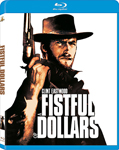
 |
|
|||||||||||||||||||||||||||||||||||||||||||||||||||||||||||||
|
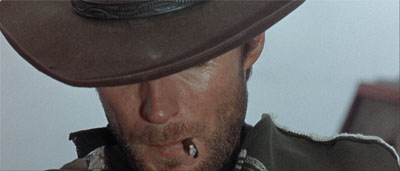 I suffered through a good number of Westerns and war movies on weekend afternoons - and weeknights - as a girl. My father couldn't get enough (especially when John Wayne was involved), and when he was home, he owned the recliner and the television.
 After seeing True Grit  and Chisum and Chisum and Big Jake and Big Jake and The Man Who Shot Liberty Valance and The Man Who Shot Liberty Valance a few thousand times, they became as comfortable and familiar to me as the old blankets I'd snuggle up in for long hours of lazy TV time. Granted, a fair amount of eye-rolling and complaints spun along in an antiphonal soundtrack the whole time over what I perceived as lack of realism in portraying gut-shot death throes, whether at the hands of a High Plains rifleman or Confederate cannons. And then Clint Eastwood rode into San Miguel on a bony mule in need of some serious currying, and I was stone in love. a few thousand times, they became as comfortable and familiar to me as the old blankets I'd snuggle up in for long hours of lazy TV time. Granted, a fair amount of eye-rolling and complaints spun along in an antiphonal soundtrack the whole time over what I perceived as lack of realism in portraying gut-shot death throes, whether at the hands of a High Plains rifleman or Confederate cannons. And then Clint Eastwood rode into San Miguel on a bony mule in need of some serious currying, and I was stone in love.Sergio Leone, who originally tried to land Henry Fonda and later Charles Bronson as his lead, got Clint Eastwood for a song to play the anti-hero character who would become "The Man with No Name." Barred by his Rawhide  contract from making movies in the U.S., Eastwood took Leone up on his offer of $15,000 and a free Italo-Spanish vacation. A screen legend was born as Fistful of Dollars contract from making movies in the U.S., Eastwood took Leone up on his offer of $15,000 and a free Italo-Spanish vacation. A screen legend was born as Fistful of Dollars rewrote the stylebook for the Western movie. Eastwood's "Joe" was a smart, cynical anti-hero, beholden to none and more than happy to play two sides against the middle for cash in hand before riding out of town as attachment-free as when he rode in. rewrote the stylebook for the Western movie. Eastwood's "Joe" was a smart, cynical anti-hero, beholden to none and more than happy to play two sides against the middle for cash in hand before riding out of town as attachment-free as when he rode in.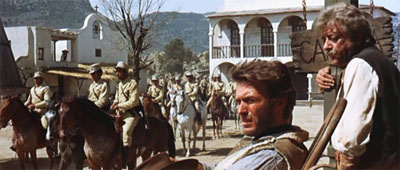 The stories behind the crafting of this polyglot production made on the cheap with German, Italian and Spanish money in low-cost Spain only serve to enhance the stature of the movie. Leone based the script on the legendary Akira Kurosawa's samurai film
Yojimbo The stories behind the crafting of this polyglot production made on the cheap with German, Italian and Spanish money in low-cost Spain only serve to enhance the stature of the movie. Leone based the script on the legendary Akira Kurosawa's samurai film
Yojimbo , which was as revolutionary to its genre as Fistful of Dollars would be to the Western and to the many action heroes who would come. Other than a few large-scale set pieces and its cultural setting, Leone's finished product hewed so closely to Kurosawa's that the Japanese director sued, eventually winning full Japanese distribution rights for Leone's film. , which was as revolutionary to its genre as Fistful of Dollars would be to the Western and to the many action heroes who would come. Other than a few large-scale set pieces and its cultural setting, Leone's finished product hewed so closely to Kurosawa's that the Japanese director sued, eventually winning full Japanese distribution rights for Leone's film.Eastwood's travel-worn stranger rides into San Miguel, stopping for water at the well on the edge of the little Mexican border town. From that outsider vantage point, he sees a little boy emerge barefoot from behind a building, run across the road and slip into the window of another. He watches as a burly Mario Braga roists the child out a few moments later and roughs up the boy's father. When the thug spots the stranger, Eastwood holds his eyes for a moment without comment or intervention, then goes back to his dipperful of water. Before he moves on, the vision of the beautiful Marisol (West German actress Marianne Koch) watching the boy and his father retreat with longing from the window elicits a rare appreciative smile from the stranger. She shuts that down right quick when she spies him watching her and slams the window shut. After some harassment by a group of gun-toting locals, the stranger greets the saloon owner watching from the sidelines with an unruffled "Hello" and walks in for a drink. The bartender (Spanish actor Jose Calvo as Silvanito) sizes up Eastwood as a mercenary, telling him that with two bosses headquartered at opposite ends of San Miguel - the gun dealing Baxters and the liquor-running Rojo brothers, headed by the brutal but intelligent Ramon (Italian theater actor Gian Maria Volonté) - he should have no trouble finding work if he doesn't mind killing. 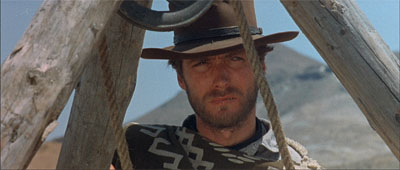 The stranger ("Joe" to the town coffinmaker, who acts as one of several Greek chorus equivalents and later assists him) calls out the rowdy quartet he met on his way in and demands that they apologize for laughing at his mule (in a scene that features several instances of the dry humor he occasionally lets slip). When the toughs go for their guns, he draws his own Colt with lightning speed, dispatching all four handily with five shots, then announcing himself for hire at the Rojo stronghold.
What follows is a tangle of massacres, stolen gold, hostage-taking, explosions, double-crosses and misdirection - and shooting, lots of shooting - as the stranger uses their own greed, jealousy and aspirations to power to play the rival factions against each other, while collecting money from both for his sleight-of-hand "scraps of knowledge." He also betrays a grudging loyalty to those who stand by him and a sense of personal justice in returning to spare Silvanito further torture by the Rojo clan and reuniting Marisol's family (not to mention saying goodbye to those hard-earned fists full of cash). In the end, though, he is the same loner mercenary when he leaves as he was when he arrived. Fans can't help but fall a little bit in love with film historian, biographer and longtime Leone cheerleader Christopher Frayling himself, given his passion and obvious fondness for his subject in his audio commentary track and the other extras featuring him. Frayling relays with delight every scrap of behind-the-scenes tidbit that his many years of extraordinarily thorough and determined research have yielded, as well as Yojimbo synchronisms. 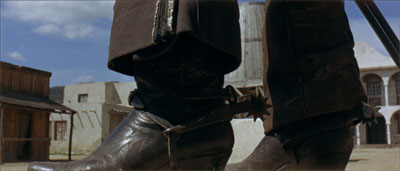 He also details the many influences on and of the movie's stylistic aspects (like the rotoscoped, James Bond-inspired opening credits), whether their genesis lay in pragmatism or in Leone's aesthetic intent. In many instances, the budget contraints - like the cheaper Techniscope two-perf film - led to stylistic signatures like the extreme closeups that took actors' faces beyond the realm of reaction shot into iconographic, artistic mood portraits. The hanging tree prominent as the stranger rides into town was cut down from a nearby property to be used as a prop on the set. When the tree's owner came out and demanded to know why his tree was being felled, Leone told him that he was from the government and that the dead tree presented a safety hazard.
Given the limitations of the original low-budget source material - the two-perf film, some filtered night scenes, the era's Italian standard of post-production looping over the multiple languages spoken during shooting - this individual release of the Blu-ray (apparently identical to its counterpart in the 2010 The Man with No Name Trilogy  set) delivers a far crisper picture than the 2007 collector's edition DVD set) delivers a far crisper picture than the 2007 collector's edition DVD and opens up the experience of Ennio Morricone's trademark scoring a degree or two. and opens up the experience of Ennio Morricone's trademark scoring a degree or two. The extra features are rehashes from 2007's The Sergio Leone Anthology  , but they are goodies - Christopher Frayling's commentary and the featurette on his Leone archives; producer Alberto Grimaldi, screenwriter Sergio Donati and actor Mickey Knox on their experiences with Leone and thoughts on his Westerns; filmmaker Monte Hellman (Road to Nowhere , but they are goodies - Christopher Frayling's commentary and the featurette on his Leone archives; producer Alberto Grimaldi, screenwriter Sergio Donati and actor Mickey Knox on their experiences with Leone and thoughts on his Westerns; filmmaker Monte Hellman (Road to Nowhere ) on the 1970 ABC network television broadcast of Fistful of Dollars and the prologue he was contracted to direct to make the film more morally acceptable for that purpose; and five minutes worth of now-and-then location juxtapositions, plus radio spots and trailers. It's a day's worth of watching that absolutely makes the day for devoted Spaghetti Western lovers. ) on the 1970 ABC network television broadcast of Fistful of Dollars and the prologue he was contracted to direct to make the film more morally acceptable for that purpose; and five minutes worth of now-and-then location juxtapositions, plus radio spots and trailers. It's a day's worth of watching that absolutely makes the day for devoted Spaghetti Western lovers.And one quick note to Christopher Frayling, who hopes that his collection of Leone memorabilia stays together when he's gone: Feel free to put me in your will. |
|
||||||||||||||||||||||||||||||||||||||||||||||||||||||||||||
|
||||||||||||||||||||||||||||||||||||||||||||||||||||||||||||||
| action | animation | art house/international | comedy | documentary | drama | family | horror/sci-fi | suspense | television | ||||||||||||||||||||||||||||||||||||||||||||||||||||||||||||||
 |
||||||||||||||||||||||||||||||||||||||||||||||||||||||||||||||
| contact | home | ||||||||||||||||||||||||||||||||||||||||||||||||||||||||||||||